


If you're a keen angler, you know that a reliable trolling motor is essential for success. However, what many anglers overlook is the importance of a high-quality battery for their trolling motor. While traditional lead-acid batteries were the go-to choice for many years, lithium batteries are increasingly becoming a superior option. This article will explain why you should choose a lithium battery for your trolling motor and how it can enhance your fishing experience.
Table of contents
- Reason 1: Lightweight and portable
- Reason 2: Longevity - LiFePO4 is cost-effective in the long run.
- Reason 3: High energy density for more power
- Reason 4: Low maintenance requirements
- Reason 5: Advanced safety features and environmental friendliness
Reason 1: Lightweight and portable
The weight of a trolling motor battery is an important factor to consider when choosing the right battery for your fishing needs. A heavy battery can negatively impact your boat's speed, maneuverability, and fuel efficiency, and make navigating rough water conditions more difficult.
Trolling motors are typically mounted at the bow or stern of a boat and used for extended periods at low speeds. A lightweight battery can therefore help reduce the boat's overall weight and improve its speed, maneuverability, and fuel efficiency.
Furthermore, the battery's weight can affect the boat's balance and handling in different water conditions. A heavy battery can cause the bow to dip and make steering in rough water more difficult, while a lighter battery can help maintain the boat's stability and responsiveness.
Compared to conventional gel cell and AGM batteries, lithium iron phosphate (LiFePO4) batteries offer a significant weight saving, which can make a big difference in the performance of your trolling motor. While a 12V 100Ah gel cell or AGM battery typically weighs between 27-31 kg, a Litime 12V 100Ah mini LiFePO4 battery only 9 kg.

This means that with up to three batteries on board, you can save up to 56 kg in weight, reducing the strain on the engine and freeing up more weight for your catch. These weight savings can improve your boat's speed, maneuverability, and fuel efficiency, allowing you to spend more time on the water and worry less about the weight of the batteries.
Reason 2: Longevity - LiFePO4 is cost-effective in the long run.
Trolling motors put a considerable strain on batteries, especially during extended use in varying water conditions and at different speeds. A battery lacking sufficient lifespan can fail prematurely, leaving you stranded on the water without power for your motor.
In contrast, a more durable battery can be used repeatedly over a longer period without losing its capacity or performance. This ensures a reliable power supply for your trolling motor whenever you need it and saves you money in the long run, as you won't have to replace the battery as often, which can be costly and time-consuming.
Another important aspect to consider is the expected lifespan of the battery. A more durable battery generally lasts longer than a less durable one. Lithium iron phosphate (LiFePO4) batteries, for example, have a lifespan 3-5 times longer than lead-acid batteries. While lead-acid batteries have a lifespan of approximately 300-500 cycles (meaning they need to be replaced every 2-3 years), LiFePO4 batteries have a lifespan of 4,000-15,000 cycles (meaning they can be used for more than 10 years).

Choosing a long-life battery will help you avoid the hassle and expense of frequent battery changes, while ensuring your trolling motor has the power it needs for optimal performance on the water.
Reason 3: High energy density for more power
Lithium iron phosphate (LiFePO4) batteries have a higher energy density than other battery types, including lead-acid batteries. This means that LiFePO4 batteries can store more energy in a smaller and lighter size compared to lead-acid batteries. The energy density of a typical lead-acid battery is about 30-50 Wh/kg, while a typical LiFePO4 battery has an energy density of about 100-150 Wh/kg. Litime 12V 100Ah Mini LiFePO4 battery It has the highest energy density in the industry: 164.5 Wh/L (142.2 Wh/kg). This means higher performance for your trolling motor, as LiFePO4 batteries can provide the motor with more energy over a longer period.

The higher energy density of LiFePO4 batteries also allows for a constant voltage output, which is crucial for the peak performance of your trolling motor. A consistent output voltage means the motor runs at a constant speed without fluctuations or interruptions, providing a smooth and efficient experience on the water.
Furthermore, LiFePO4 batteries can be discharged at a higher rate than lead-acid batteries, with discharge rates of up to 5C or more compared to 1C-2C for lead-acid batteries. This allows the battery to deliver more power to the trolling motor when needed, resulting in increased performance and longer operating times on the water. Here is a report from an angler who switched his battery to LiFePO4.

In summary, the higher energy density of LiFePO4 batteries allows for greater power and longer run times for your trolling motor. Their ability to store more energy in a smaller size and lighter weight, maintain a constant output voltage, and discharge at a higher rate makes them the ideal choice for powering your outdoor adventures, while their longer lifespan and lower maintenance requirements make them more cost-effective in the long run.
Reason 4: Low maintenance requirements
To ensure optimal performance and longevity of your trolling motor battery, proper maintenance is essential. When choosing a battery, ease of maintenance should be considered, as some batteries can be difficult to service.
Maintenance can negatively impact your overall fishing experience. Batteries that require regular upkeep, such as checking the water level, topping up with distilled water, and proper charging, can be inconvenient and time-consuming, cutting into valuable fishing time.

Lead-acid batteries, for example, require regular maintenance, and neglecting these tasks can lead to a shortened battery life or even battery failure, leaving you stranded on the water without power for your trolling motor.
In contrast, LiFePO4 batteries are considered "maintenance-free" because they require far less maintenance than lead-acid batteries. LiFePO4 batteries do not need to have their electrolyte level checked regularly, and they do not require any special charging procedures to ensure their longevity. Learn more about LiFePO4 battery maintenance in [link to relevant section]. The Ultimate Guide to LiFePO4 Battery Maintenance: Keep Your Battery Performing. Choosing a LiFePO4 battery can save you time and effort on maintenance and allow you to have a trouble-free fishing experience on the water.
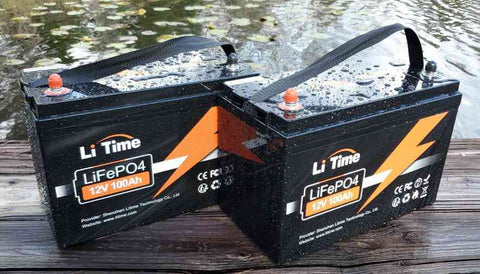
Therefore, battery maintenance is an important aspect to consider when choosing a trolling motor battery. Opting for a low-maintenance option like a LiFePO4 battery can offer advantages in terms of time, effort, and overall performance on the water.
Reason 5: Advanced safety features and environmental friendliness
Safety is paramount with trolling motor batteries, as overcharging and undercharging pose the greatest safety risks. Overcharging can lead to overheating, which can result in a battery rupture or explosion, while undercharging can damage the battery and reduce its performance.
Another safety risk is the release of toxic gases during charging or use. Lead-acid batteries, for example, can release hydrogen gas, which is highly flammable and poses an explosion or fire hazard if not properly vented. LiFePO4 batteries, on the other hand, do not emit toxic gases, making them a safer choice for confined spaces such as boats.
To ensure the safety of the battery for your trolling motor, it is important to choose a battery with advanced safety features such as overcharge protection, thermal regulation, and short-circuit protection. It is also important to store and use the battery in a well-ventilated area, away from heat sources and flames.
LiTime's LiFePO4 batteries come with an integrated BMS (Battery Management System) equipped with a protection against overcharging, over-discharging, overcurrent, short circuit and high temperatures, thus ensuring optimal safety and reliability of the batteries.

By selecting a battery with advanced safety features and following the guidelines for proper storage and use, you can minimize the risks associated with battery use and enjoy a safe and worry-free experience on the water with your trolling motor.
Conclusion
A high-quality trolling motor battery is essential for any outdoor enthusiast, and lithium batteries offer numerous advantages over traditional lead-acid batteries. With their higher energy density, longer lifespan, low maintenance, lightweight and portable design, safety features, and environmental friendliness, lithium batteries are the ideal choice for powering your trolling motor and other outdoor adventures. Investing in a high-quality lithium battery means you can enjoy improved performance, longer run times, and peace of mind on the water.


