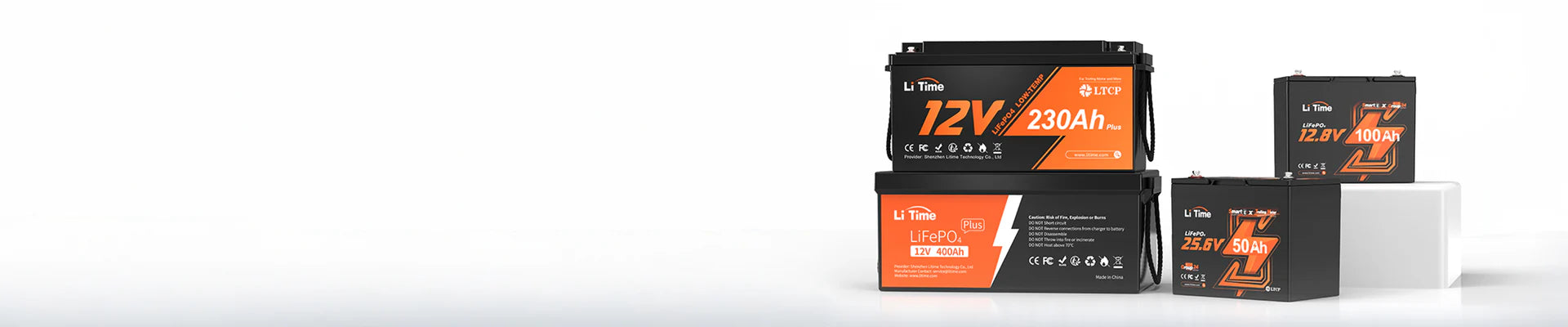
If you need to quickly find the right one Balcony power plant with storage If you want to find it, follow these three steps:
- Clarify the goal: Do you need to cover 3-5 hours of base load (lights, router) in the evening – or more devices? First, estimate the Evening consumption (kWh) and check Power limits (e.g. 800 W/2000 W).
- Choose architecture:
- AC coupling (microinverter) For balconies/rental apartments – easy installation, direct network integration.
- DC coupling (hybrid inverter) for own home/extensions – higher overall efficiency and better scalability.
Tension & Set capacity:
12V/24V LiFePO4 for compact/mobile solutions,
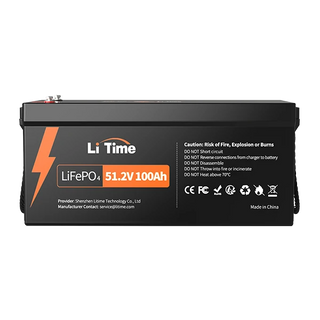
48 V/51.2 V LiFePO4 as a scalable household standard,
Starting point: Evening consumption × 1.2–1.4 (Losses), then fine-tune according to budget/space.
Once these three points are clarified, skip directly to... Section 3 “SKU Quick Selection (Voltage × Capacity × Scenario)”. For open compatibility questions, help Section 4 including a checklist of components/interfaces (MPPT, hybrid inverter, BMS, etc.).
Balcony power plant with storage: Scenarios & Connection
Scenario recommendations:
- Reduce peak loads (balcony/rent): 300–800 W modules + AC-coupled storage (Plug-and-Play), preferably LiFePO4 24/48 V – compact and quiet.
- Emergency power & Camping (Off-Grid): Folding modules + DC Hybrid All-in-One with integrated MPPT solar charge controller; 12/24 V LiFePO4, Inverter power output: 600–1500 W.
- Easy backup (Refrigerator/router + light): 400–800 W fixed modules + Hybrid inverter 48 V + 2–4 kWh LiFePO4 for high coupling efficiency and backup power.
Connection topologies (focus on cabling):
- AC coupling: Solar panels → microinverter → house AC; storage (AC-coupled) on the same circuit – first self-consumption, surplus charges the storage. Minimally invasive, ideal for existing balcony systems.
- DC coupling: Solar panels → MPPT → Hybrid inverter → 48 V LiFePO4 (BMS) → AC output/backup. Shorter energy paths, higher efficiency for nighttime consumption and grid disturbances.
compatibility & Security:
- MPPT sizing: SeriesVocal × 1.2 below the controller limit; Isc ≤ Controller limit (e.g. 100/20, 100/30).
- Battery/inverter profiles: LiFePO4 charging characteristic and BMS-Adjust the discharge current to peak loads.
- Protection: DC fuse/disconnect, correct MC4 crimping; comply with AC-side standards/registration.
efficiency & Life:
- 1.1–1.3× slight oversizing module/MPPT;
- SOC Suitable for everyday use at 10–90% cold protection < 0 °C;
- South-facing orientation 15–35° and low line losses should be taken into account.
Balcony power plant with storage (voltage × capacity × scenario)
| Tension | capacity | scenario | Recommended configuration/SKU note |
|---|---|---|---|
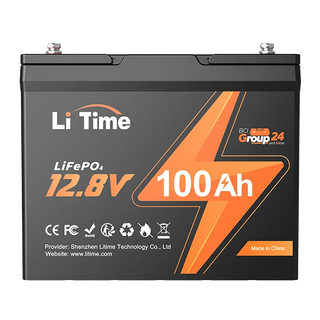
| 12 V | 100 Ah | Motorhome (Base) | 12V 100Ah LiFePO₄ + MPPT Charge Controller 20-30A |
| 12 V | 200 Ah | Motorhome (travel/self-sufficient) | 12V 200Ah LiFePO₄ + MPPT Charge Controller 40-60A |
| 12 V | 300 Ah | Motorhome (long-term) | 12V 300Ah LiFePO₄ (Bluetooth) + MPPT charge controller 60-80A |
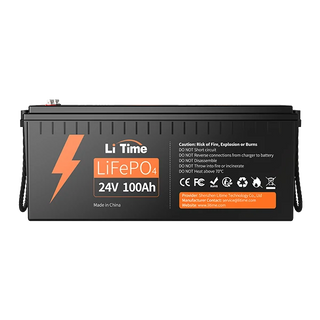
| 24 V | 100 Ah | Garden shed (small) | 24V 100Ah LiFePO₄ + MPPT charge controller 30-40A |
| 24 V | 200 Ah | Garden shed (medium) | 24V 200Ah LiFePO₄ + MPPT charge controller 60-80A |
| 24 V | 300 Ah | Garden shed (large) | 24V 300Ah LiFePO₄ + MPPT Charge Controller 80-100A |
| 48 V | 50 Ah | Balcony power plant 800 W (entry-level) | 48V 50Ah LiFePO₄ + Micro-inverter (up to 800W) |
| 48 V | 100 Ah | Balcony power plant 1.6 kW (Extended) | 48V 100Ah LiFePO₄ + Micro Inverter/Hybrid Inverter |
| 48 V | 150 Ah | Balcony power plant 2.0 kW (Plus) | 48V 150Ah LiFePO₄ + Hybrid Inverter 48V |
| 12 V | 100 Ah | Boat/Electric motor | 12V 100Ah LiFePO₄ (Marine) + MPPT + 12V output |
| 24 V | 100 Ah | UPS/Emergency power | 24 V 100 Ah LiFePO₄ + 24 V inverter (sine) |
| 48 V | 100 Ah | Home storage/Hybrid | 48V 100Ah LiFePO₄ Rack + Hybrid Inverter 48V |
Key points about MPPT solar charge controllers
compatibility & Safety: LiFePO4 with hybrid inverter
-
Choose one Hybrid inverter 48 V with MPPT solar charge controller and check adjustable charging/discharging voltages for LiFePO4 (LVP/UVP, Absorption/Float).
-
The battery BMS (Bluetooth/communication) should support the inverter protocol or provide at least voltage/temperature protection; use DC cables. & Fuses according to specification.
-
PV power ≤ DC input of the inverter, string voltage ≤ Voc limit; grounding, surge protection and RCD according to local standards.
-
Commissioning sequence: Battery → Inverter → PV; Firmware & Parameters (e.g. feed-in limit in the Balcony power plant with storage) set correctly.
installation & Cabling (Keywords include: Hybrid inverter 48 V, LiFePO4, balcony power plant with storage)
Scope
This chapter is aimed at special to Hybrid inverter 48 V + LiFePO4 in context Balcony power plant with storage and refers to the SKU list and balcony feed-in limits.
Order of connections
-
DC side: Check PV strings according to series/parallel (VOC/polarity) → connect to MPPT or PV input of the hybrid inverter.
-
Battery side: LiFePO4 main switch/BMS switch on → on 48V DC bus bar/battery port connect the inverter.
-
AC side: Select grid/island mode → feed into house circuit or socket; menu item for Performance limitation Have it ready.
-
communication: BMS↔Pair WR/Monitoring (CAN/RS485/BT-App), check protocol compatibility.
conductor cross-section & Protection (SKU-related)
-
DC conductor to Current × Length × Temperature; Multi-stranded copper preferred; PV strands with MC4 fuse/anti-parallel diode (Check if connected in series).
-
Battery side NH/ANL fuse + DC line protection near the source.
-
Anchor points: For 48 V × 100 Ah (balcony storage)/48 V × 200 Ah (garage wall mounting) Please refer to the table for the minimum cross-sections and fuse sizes.Voltage×Capacity×Scenario×SKU“Use below.”
Parameters (LiFePO4-specific)
-
Charging profile in the inverter/MPPT on LiFePO4/USER place; Temperature compensation OFF, BMS priority ON.
-
Example (not a purchase recommendation): At Victron/EPever in the panel/app LiFePO4/USER select absorption/float voltage & Set tail current according to BMS; Equalize OFF, Low-temperature charge protection ON.
Network compliance & Performance limitation
-
Keep local Plug-in solar limits and reporting obligations; activate in the WR menu Power limit/Export limit, possibly Zero-Feed-in.
Acceptance checklist (page-specific)
-
Assembly: Torque/tensile test document; balcony/facade systems according to Wind load.
-
Thermals: In the first 72 h Non-critical case/terminal temperatures, no error logs.
-
Security: Quick-release couplings DC/AC with marking.
-
Monitoring: Plausible SOC, PV power, power limit-curves; no BMS/WR alarms.
commissioning & Parameters (Keywords: MPPT solar charge controller, hybrid inverter 48 V, LiFePO4)
After wiring, set the battery type in the MPPT solar charge controller or hybrid inverter to "LiFePO4" and set the charging parameters (typically: 56.0–56.8 V absorption, 54.0–55.2 V float – the BMS datasheet is authoritative).
Activate temperature/voltage compensation and enter capacity and cycles/SOH values to ensure accurate SOC estimation. For microinverters and DC storage, operate the MPPT's PV inputs within the safe Vmp/Voc window and set the maximum...
Limit the charging current below the battery and cable limits. Devices with communication (e.g., Victron SmartSolar MPPT 75/15, 100/30) via Bluetooth/VE.Direct Monitor and fine-tune string layout and charging/unloading strategy based on historical data.
maintenance & Monitoring: Using MPPT and the app correctly (balcony power plant with storage)
In your daily operations, focus on "checking data, optimizing parameters, and preventing problems": Use the inverter/battery app to monitor yield, load profile, and state of charge (SoC), and investigate any anomalies. Validate charging/discharging voltages and temperature compensation seasonally on your MPPT solar charge controller.
For LiFePO₄, a SoC window of approximately 10–90% is recommended, including cell balancing and protection functions. Regularly update the firmware of hybrid or micro-inverters and, if there are feed-in/reverse power limits, correctly set the power limit in the grid menu.
On the hardware side, tighten screw connections, check cooling and dust, and adjust the module angle seasonally – this is how the balcony power plant with storage remains permanently efficient.
Closing remarks
With LiTime (litime) combine LiFePO4 battery, MPPT solar charge controller and 48V hybrid inverter to an efficient Balcony power plant with storage as well as scalable Solar storage-Solutions for motorhomes/boats and the PV system at home.