


In cold regions, as well as for outdoor activities, winter camping, or off-grid living in a motorhome, auxiliary batteries and stationary battery storage systems are indispensable. However, it becomes apparent, especially at low temperatures, that many batteries lose significant performance.
Especially in winter, charging efficiency and discharging performance decrease, which often leads to unexpected failures.
This guide explains why Batteries perform worse in cold weather, compares different battery types and shows why LiFePO4 batteries with cold-weather capabilities These are the best choice for cold regions. We also give specific recommendations on what to look for when buying them.
Why do batteries perform worse in cold weather – and what helps?
A battery's performance is highly dependent on the ambient temperature. As the temperature drops, the electrolyte becomes more viscous, chemical reactions slow down, and both Capacity as well as output power decrease significantly.
This is particularly critical with lithium batteries.
- LiFePO4 batteries cannot be safely charged below 0 °C
- Under At -20 °C, the discharge can also become unstable.
Even conventional lead-acid batteries are affected. Their internal resistance increases significantly in cold temperatures, which means that high currents – for example, for inverters or motors – can no longer be reliably supplied.
Proven measures for cold regions:
- Use of batteries specifically designed for low temperatures
- Selection of models with Self-heating function or cold-weather shutdown
- Additional insulation or temperature-controlled installation (battery box, cover)
Battery performance in cold weather: Comparison by battery type
Not every battery is suitable for winter use. The differences are significant.
- Lead-acid batteries: Cheap, but significant capacity loss in cold weather
- AGM batteries: Somewhat more robust, vibration-resistant, moderately cold-resistant
- Nickel-metal hydride batteries: Sure, but low energy density
- Lithium-ion batteries: Lightweight and powerful, but often sensitive to cold
- LiFePO4 batteries: Very durable, extremely safe and with additional features also suitable for winter use
Particularly LiFePO4 batteries with integrated heating or protection function They show significantly higher reliability in winter.
LiFePO4 batteries – advantages and limitations in cold weather
LiFePO4 batteries (lithium iron phosphate) have become increasingly popular in Europe. Standard solution for motorhomes, solar storage systems, boats and off-grid systems established.
Key advantages:
- Very high safety with minimal risk of fire or explosion
- Extremely long lifespan with over 4,000 charging cycles
- Low weight with high usable capacity
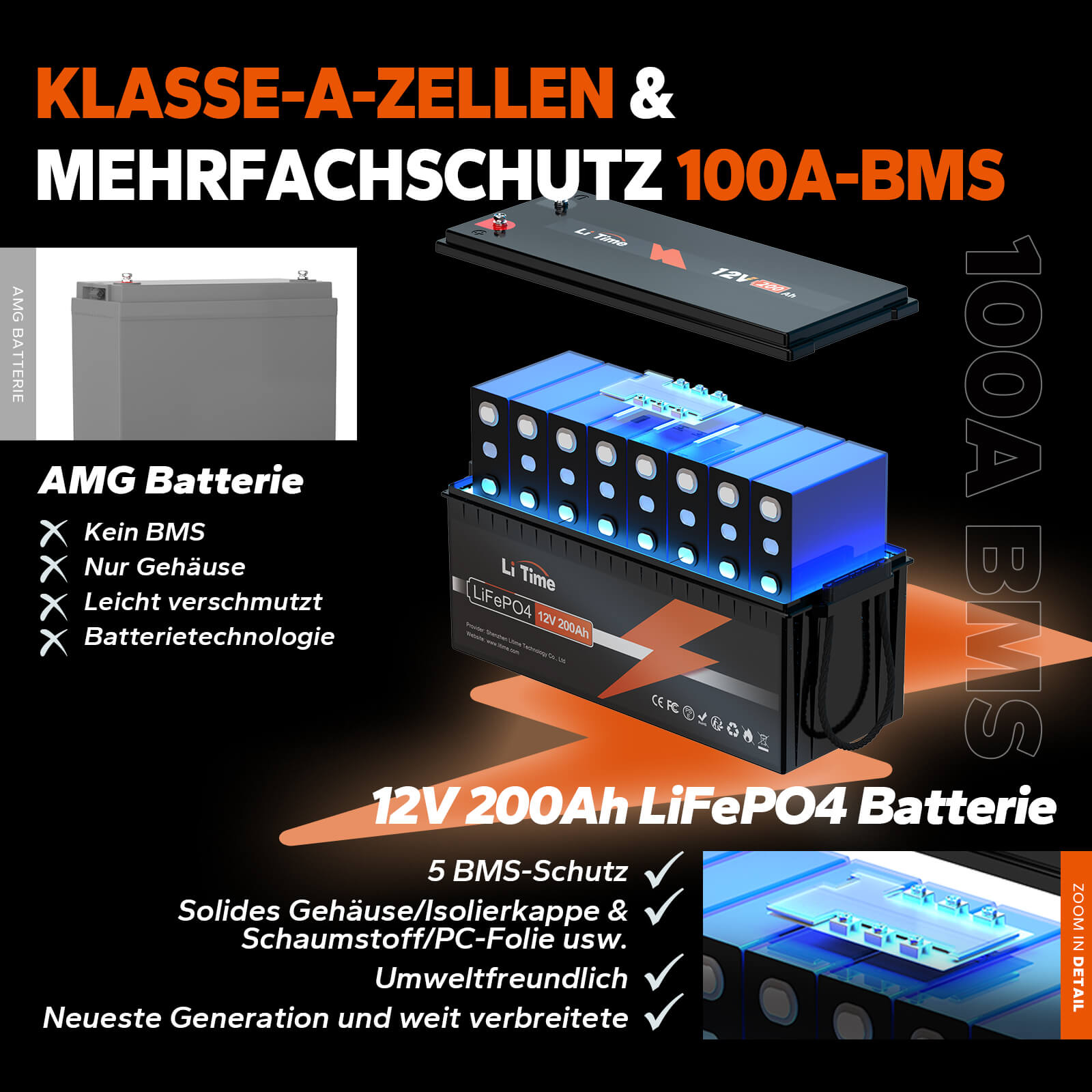
Important restrictions in winter:
- Charging below 0 °C is not permitted
- Discharge below −20 °C can be stopped automatically.
Therefore, when deployed in cold regions, the choice of a LiFePO4 models with special winter function decisive.
Modern cooling functions in LiFePO4 batteries
To ensure safe operation of LiFePO4 batteries even in winter, two key technologies are currently used.
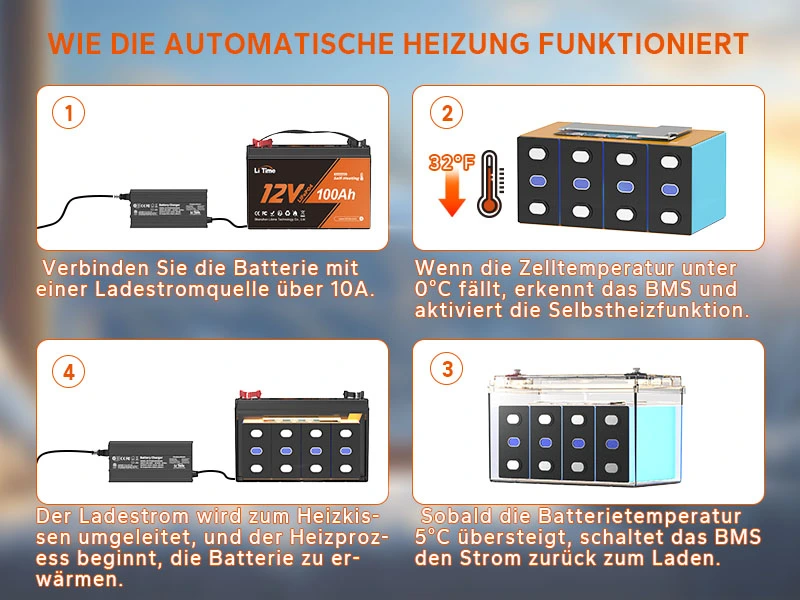
Self-heating LiFePO4 batteries
These batteries feature integrated temperature sensors, internal heating elements, and an intelligent battery management system.
- Automatic activation of the heating system when -20 °C to +5 °C
- The charging process only starts when the cell temperature above 10 °C lies
This technology is ideal for winter camping, Motorhome overnight stays, off-grid houses and cold garages.
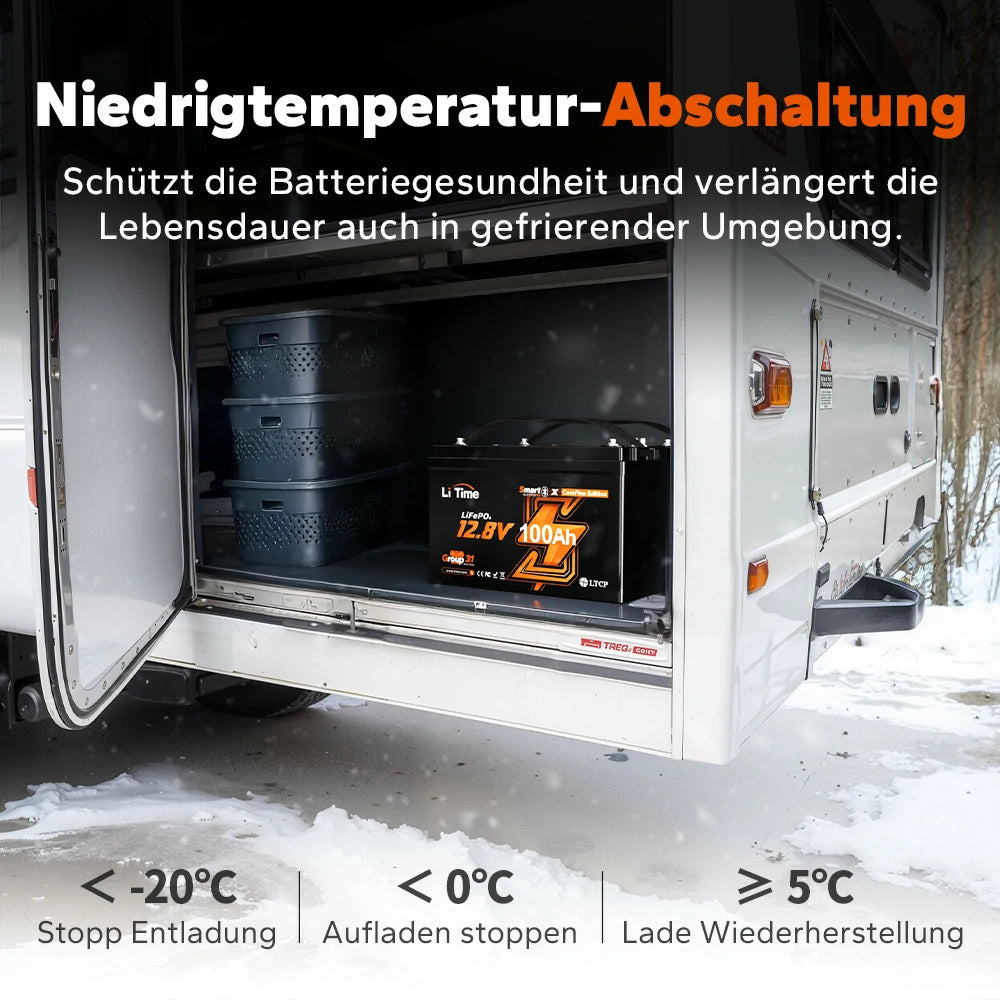
LiFePO4 batteries with low temperature cut-off
This protective function prevents permanent cell damage.
- Charging cutoff under 0 °C
- Discharge shutdown under -20 °C
- Automatic re-release upon temperature increase
This intelligent protective shutdown significantly extends the service life and ensures maximum operational safety.
Recommended LiFePO4 batteries for cold regions
Self-heating models are particularly suitable for extreme winter conditions.
- Additional battery in the motorhome
- Stationary battery storage
- Solar power systems and emergency power supply
- Self-sufficient living in sub-zero temperatures

Models with cold weather shutdown and smart features are particularly suitable for mobile applications and compact installations.
- Automatic charging and discharging shutdown
- Bluetooth monitoring via app
- High energy density in a compact design
- Versatile use for camping, boats and emergency power

Summary: Choosing the right battery for winter
Anyone who Battery for cold regions Those looking should not only focus on capacity.
The following are crucial:
- Self-heating function or low-temperature shutdown
- Intelligent BMS with multiple protection
- Suitable capacity for the intended use
LiFePO4 batteries with winter function They currently offer the best combination of safety, durability and reliability – even at permanently low temperatures.
Frequently Asked Questions (FAQ)
How does the self-heating function work?
The heating is automatically activated by the battery management system as soon as the battery is connected to a charger.
If the cell temperature is between -20 °C and +5 °C, the heating process begins. Once a safe temperature is reached, the charging process starts.
Is it possible to heat a LiFePO4 battery externally?
Technically this is possible, however Not recommended.
External heaters usually only warm the casing, while the cell temperature barely rises. This can cause the casing to become dangerously hot without the battery's internal temperature being adequately maintained.


